
 Search
 Account
 Cart
CartUsing the TORIC 10×42 Eagle Ballistics Rangefinder with the Eagle Ballistics app gives you a powerful combination of optical clarity, precise ranging, environmental data, and ballistic calculations. But what happens when the rangefinder tells you one elevation adjustment and the app tells you something different?

According to long-range instructor James Eagleman of Eagle Ballistics, the good news is that there is usually nothing wrong with either device.
In most cases, the difference comes down to one of a few settings that aren’t matching between the rangefinder and the app.
The rifle profile, compass calibration, wind speed and direction, and environmental data all play a role in the ballistic solution. If those inputs aren’t the same, the calculated elevation or wind correction can be different.
The following guide walks through the process James demonstrates for getting the TORIC 10×42 Eagle Ballistics Rangefinder and Eagle Ballistics app on the same page.
Start by Syncing Your Rifle Profile: 10×42 Eagle Ballistics Rangefinder
Before worrying about environmental conditions or ballistic corrections, make sure the correct rifle profile has been uploaded to the rangefinder.
Open the Eagle Ballistics app and connect your TORIC 10×42 Eagle Ballistics Rangefinder.
Wake the rangefinder by following the device prompt, then allow the rangefinder’s sensors to initialize.
Once the sensors are ready:
- Select the binocular/rangefinder device in the app.
- Select Select when the device is available.
- Choose the rifle profile you want to use.
- Select Sync.
- Confirm that the rifle profile has been uploaded.
Important: Uploading a rifle profile to the rangefinder does not necessarily mean the app itself is now using that same rifle profile.
This is one of the most common reasons for different ballistic solutions.

Check the Rifle Profile in BOTH Devices
After syncing, look at the rifle profile displayed on the rangefinder and compare it with the rifle profile currently selected in the Eagle Ballistics app.
For example, James demonstrated a situation where the rangefinder was using Gun 4, while the app was still set to Gun 3.
Even though Gun 4 had been uploaded to the rangefinder, the app itself had not been changed to Gun 4.
The result?
The two devices produced different elevation corrections.
The solution was simply to select the same rifle profile in the app.
If your rangefinder and app are showing different ballistic data, check the rifle profile first.
Screenshot: Select the Rifle Profile

What to look for: Make sure the rifle profile selected in the app is the same profile being used by the rangefinder.
Check Your Compass Calibration
Your compass heading is another important input to the ballistic solution.
When you arrive at a new shooting location, James recommends calibrating the compass before relying on the ballistic data.
How to Calibrate the Compass
James demonstrates the following process:
- Move away from your vehicle and other potential sources of magnetic interference.
- Press and hold the Mode button on the rangefinder.
- Navigate to Compass.
- Enter the compass function.
- Select Calibration.
- Rotate the rangefinder through the required calibration movements.
- Continue rotating it through the complete calibration process.
- Complete the calibration and select Done.
James refers to this as doing the “whole pizza thing”—essentially rotating the unit through the complete calibration sequence.
Once calibration is complete, your compass is ready to provide a more accurate heading.
Why Does Compass Direction Matter?
The ballistic solution can change depending on the direction you are shooting and the relationship between your shooting direction and the wind.
In James’s demonstration, the rangefinder and app initially showed slightly different compass headings—approximately 204° versus 211°.
That difference alone wasn’t the primary reason for the larger discrepancy he was seeing, but it illustrates why keeping the system properly calibrated is important.
Screenshot: Compass Calibration TORIC 10×42 Eagle Ballistics Rangefinder
Tip: Calibrate the compass when you arrive at a new location, particularly before relying on the rangefinder for a precision ballistic solution.
Make Sure the Wind Matches: TORIC 10×42 Eagle Ballistics Rangefinder
Once the rifle profile and compass are correct, check the wind.
This is another area where a seemingly small difference can change the ballistic solution.
Your wind direction and wind speed must match between the rangefinder and the Eagle Ballistics app if you want the two systems to produce the same calculated solution.
James demonstrates this by comparing the wind settings.
At one point, the settings were not identical. After making the wind settings match, the calculated elevation corrections moved closer together—but they still weren’t exactly the same.
Why?
Because there was still another difference in the setup.
Wind Can Affect Vertical Correction : TORIC 10×42 Eagle Ballistics Rangefinder
It is easy to think of wind as something that only changes your horizontal hold.
However, the ballistic calculation can also account for aerodynamic jump, which can introduce a vertical component to the solution.
That means even a relatively small difference in wind speed or direction can change the elevation correction.
James demonstrated that at 500 yards, a difference of only about 0.5 mph of wind could change the calculated elevation correction.
After reducing the wind setting so that both devices were using the same value, the rangefinder and app displayed the same solution.

The Takeaway
If your rangefinder says one elevation correction and the app says another, don’t automatically assume there is a problem with the ballistic calculator.
Compare the wind settings first.
Make sure both devices are using:
- The same wind speed
- The same wind direction
- The same rifle profile
- The same environmental information
Check Your Environmental Data
Temperature is another input that can affect your ballistic solution.
The Eagle Ballistics app can automatically obtain temperature and humidity from the nearest weather station when cellular service is available.
The app can also receive environmental information from compatible external devices when configured to do so.
The important thing is to understand where your environmental information is coming from.
The App’s Weather Data
When you open the Eagle Ballistics app, it can automatically obtain temperature and humidity information from the nearest weather station when you have cellular service.
If you don’t have cellular service, James recommends using a compatible environmental device, such as a Kestrel, to provide the necessary environmental information to the app.
Understand the Rangefinder’s Temperature Sensor
The TORIC 10×42 Eagle Ballistics Rangefinder has its own environmental sensing capability.
However, temperature readings can be affected by the temperature of the rangefinder itself.
If the unit has recently come out of a vehicle, case, or another environment with a different temperature, its internal temperature reading may not immediately represent the actual ambient temperature.
James points out that ballistic rangefinders can require significant time to acclimate to the surrounding temperature.
Allow the Rangefinder to Acclimate
For the most consistent environmental readings, allow the rangefinder sufficient time to acclimate to the surrounding conditions before relying on its temperature reading.
If necessary, James demonstrates that the environmental source can also be changed and the temperature manually adjusted.
Screenshot: Environmental Source

From the rangefinder’s menu, navigate to the environmental settings and check where the temperature information is coming from.
If the rangefinder is supplying temperature information to the app, make sure that is intentional.
Make the Environmental Source Match
One of the easiest ways to create confusion is to have the rangefinder and app using different environmental inputs.
For example:
Rangefinder: Using its internal temperature reading
App: Using temperature from the nearest weather station
Even if both readings are reasonably accurate, they may not be identical.
And if the inputs aren’t identical, the ballistic solutions don’t have to be identical.
James demonstrates how to allow the rangefinder to provide its temperature to the app so both are working from the same temperature.

A Simple Example
James demonstrated this process by ranging a target at approximately 500 yards.
Initially, the rangefinder and app showed different elevation corrections.
He then worked through the possible causes.
1. Check the Compass
The compass readings were slightly different.
2. Check Temperature
The environmental readings were compared, and the rangefinder was configured to provide temperature information to the app.
3. Check Wind
The wind settings were found to be different.
The settings were then made identical.
4. Check the Rifle Profile
This turned out to be the major issue.
The rangefinder was using Gun 4, while the app was still using Gun 3.
The app was changed to Gun 4.
Once the rifle profile and other inputs were synchronized, the two systems produced essentially the same ballistic solution.
Finally, James demonstrated that matching the wind inputs brought the displayed corrections into agreement.
The result: approximately 500 yards with matching elevation corrections on both the rangefinder and app.
The Four Things to Check When Data Doesn’t Match
If you see different elevation or wind corrections on your TORIC 10×42 Eagle Ballistics Rangefinder and in the Eagle Ballistics app, work through this checklist before assuming there is a problem.
1. Rifle Profile
Are both devices using the same rifle profile?
This should be the first thing you check.
Remember: Syncing a rifle profile to the rangefinder does not necessarily mean the app is displaying that same profile.
Verify the selected rifle profile in both places.
2. Compass
Has the rangefinder’s compass been calibrated at your current location?
When you arrive at a new shooting location:
- Move away from the vehicle.
- Enter the compass menu.
- Perform the calibration procedure.
- Complete the full rotation sequence.
- Confirm the calibration.
3. Wind
Are the wind speed and direction identical?
Check both:
- Wind speed
- Wind direction
Even a small difference can change the ballistic solution, particularly at longer distances.
Remember that the ballistic calculation can account for aerodynamic jump, meaning wind can influence the vertical correction as well as the horizontal correction.
4. Temperature & Environmental Data
Are both systems using the same environmental information?
Check:
- Temperature
- Humidity
- Environmental source
- Whether the rangefinder or app is supplying the data
If the rangefinder has recently moved from a significantly different temperature environment, allow it time to acclimate.
The Quick Pre-Shot Checklist
Before beginning a precision shooting session, James’s demonstration can be condensed into this simple routine:
When You Arrive
☐ Calibrate the compass
☐ Select the correct rifle profile in the rangefinder
☐ Select the same rifle profile in the Eagle Ballistics app
☐ Sync the rifle profile
☐ Verify wind direction
☐ Verify wind speed
☐ Verify temperature
☐ Verify humidity/environmental source
☐ Allow the rangefinder to acclimate to ambient temperature
Before Taking Your Shot
☐ Range the target
☐ Compare the ballistic solution shown by the rangefinder and app
☐ If they don’t match, check the rifle profile first
Then work through compass, wind and environmental inputs.
Why Matching Inputs Matters
A ballistic calculator can only produce a solution based on the information it receives.
If two devices are calculating the same shot but using different inputs, they can legitimately produce different answers.
Think of it this way:
Same rifle profile + same range + same environmental data + same wind + same heading = matching ballistic solution
Change one of those variables and the answer can change.
That’s why the goal isn’t simply to make the numbers look the same.
The goal is to make sure both systems are using the same information to calculate the shot.

The Bottom Line
The TORIC 10×42 Eagle Ballistics Rangefinder and the Eagle Ballistics app are designed to work together, but they need to be configured consistently.
If you’re seeing different elevation corrections or wind holds between the two, James Eagleman’s advice is straightforward:
Check your rifle profile first.
Then check your:
Compass → Wind → Temperature → Environmental Source
In James’s demonstration, the difference wasn’t caused by a problem with the rangefinder or the app. The devices were simply working from different inputs.
Once the rifle profile and environmental information were synchronized—and the wind settings were made identical—the rangefinder and app produced essentially the same ballistic solution.
So before you start changing ballistic data or questioning your equipment, take a moment to compare the inputs.
Same inputs. Same conditions. Same ballistic solution.
And if you’re still having trouble getting your TORIC 10×42 Eagle Ballistics Rangefinder and Eagle Ballistics app to agree, the TRACT team is available to help you work through the setup and get everything properly synchronized.
TRACT Optics
Phone: 631-662-7354
Email: [email protected]
SHOP NOW!
 TORIC 10X42 Eagle Rangefinding Binocular
A premium SCHOTT HT binocular with an integrated laser rangefinder. Distance and angle compensation in one tool.
Read MoreBuy Now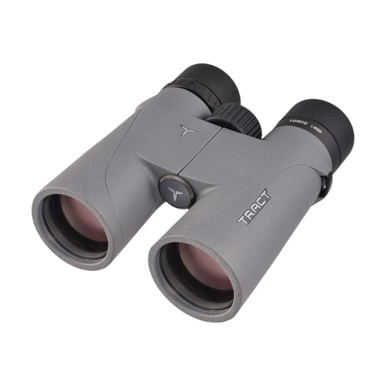 TORIC UHD SCHOTT HT 10X42 Binocular
The all-around outdoor binocular for birders, hikers, and wildlife observers. SCHOTT HT glass for premium light transmission.
Read MoreBuy Now TORIC UHD SCHOTT HT 8X42 Binocular
Built for the dawn-and-dusk window when wildlife is on the move. SCHOTT HT glass, ED lenses, and a wide field of view.
Read MoreBuy Now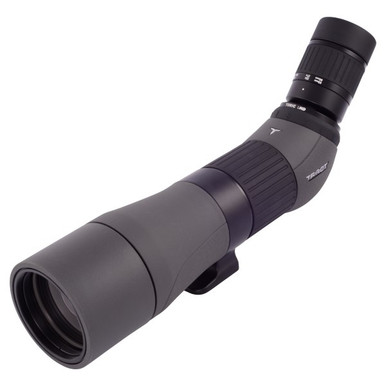 TORIC UHD 22-45X65 Angled Spotting Scope
The 45-degree angled eyepiece reduces neck strain on long sessions, and the lightweight 65mm body keeps pack weight down.
Read MoreBuy Now TORIC UHD SCHOTT HT 15X56 Spotting Binocular
When 12x is not enough and an 80mm spotter is too much. Both eyes on glass, 15x magnification, 56mm objectives.
Read MoreBuy Now